
About
Research. Software. Accountable systems.
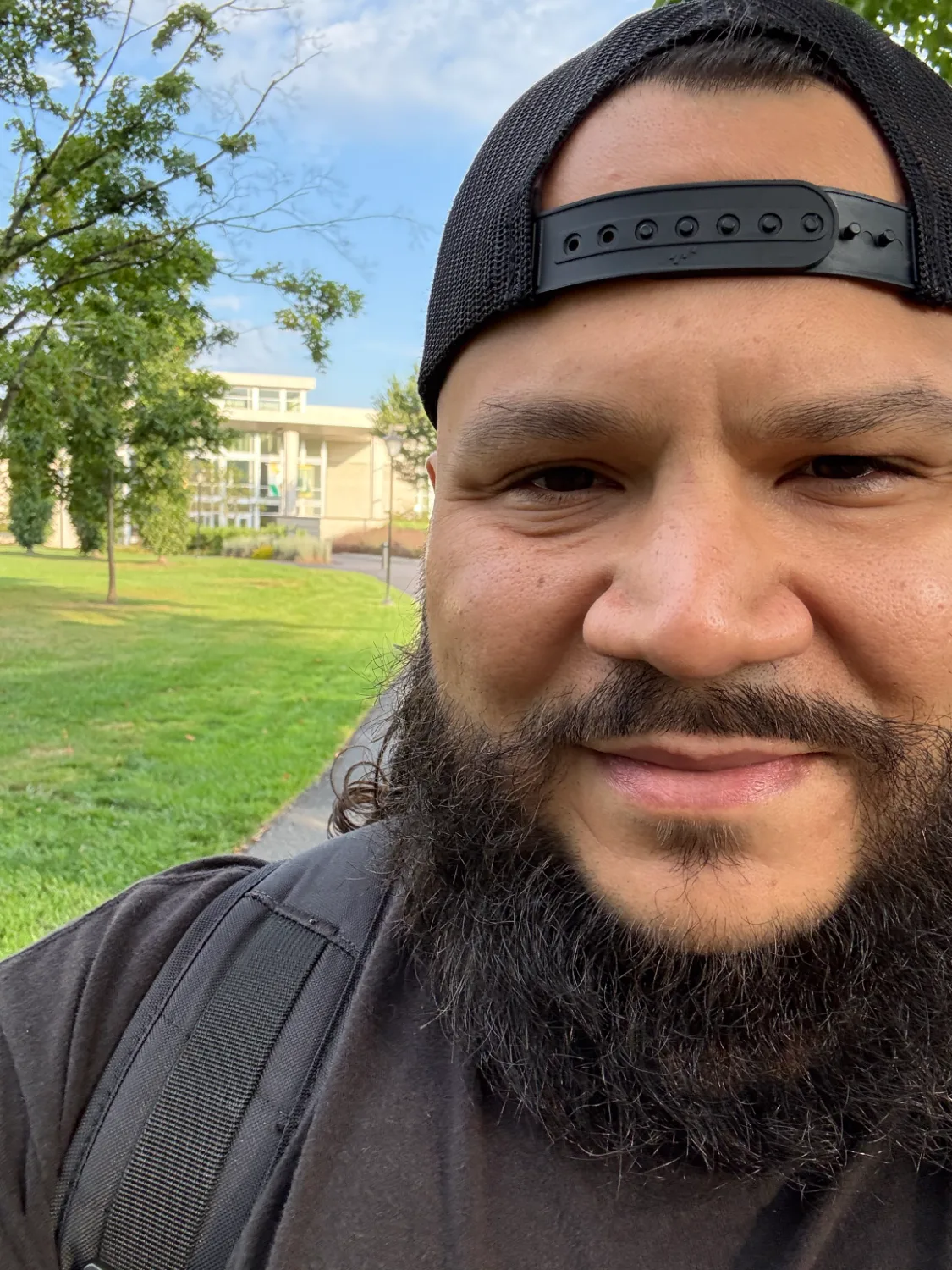
Anthony J. Vasquez Sr.
Founder and managing member · U.S. Army veteran · Independent researcher · ORCID 0009-0000-6440-1506
Anthony J. Vasquez Sr. is the founder and managing member of AV Family Enterprise LLC. A U.S. Army veteran, he brings a practical, hands-on perspective to software and AI research, with an emphasis on accountability, useful tools, and disciplined technical follow-through.
His background in automotive parts operations and industrial process work shaped a preference for tools that hold up in use: clear responsibilities, records that survive review, and room for a person to correct the system. His research interests span computational pharmacology, dynamical systems, AI architecture, and computational phenomenology.
Scale, stated plainly
AV Family Enterprise is founder-led. Projects are scoped to what one accountable engineer and named collaborators can deliver and stand behind. “Family” here means responsibility, continuity, and stewardship — not a staff roster.
Research origins
The Temple of Two
The founder’s wider public research and human–AI collaboration practice is published through The Temple of Two. It began with a question across two substrates — biological and computational — about whether living cells and artificial systems share a grammar of threshold and commitment. Whether that recurrence is coincidence or constraint remains an open research question, and is labeled as one.
Selected examples are referenced on this site to explain the technical approach and research lineage behind AV Family Enterprise’s work. Papers are published under CC BY 4.0; instruments carry their own licenses.
AV Family Enterprise is the business-facing identity for scoped engagements; The Temple of Two is the wider research identity. A project’s appearance on this site does not change its license or ownership.
Public research on GitHub →Standards applied to every claim
Technical ambition, evidence discipline
- 01
A question may precede the evidence. It may not answer.
Every question entering the work is named as a question until an instrument says otherwise.
- 02
Every claim carries its standing.
Type, lifecycle, and evidence travel with the claim wherever it appears. A shipping instrument, an untested hypothesis, and a first-person account are never shown as the same kind of thing.
- 03
Negative results stay visible.
An idea that fails the test stays in the record. Constraining the hypothesis space is progress; deleting the failure destroys it.
- 04
Distinctions are kept.
A hypothesis from a result; a prototype from a deployed system; an AI-generated proposal from an authorized action; a metric from its scope and date.
A claim that changed after testing
Original thesis (2025): entropy maximisation is an engine that drives a system forward. Pre-registered test: if so, its effect should scale with the geometry of the state space in a specific way. Result (July 2026): the geometry-scaling prediction failed; a second apparent effect dissolved under matched-estimator control. Published finding: entropy is a tunable equilibrium, not a prime mover — issued under its own DOI, with the earlier framing kept in the record.
Working method
Step 1
Define the problem
Agree what useful success would look like, what constraints matter, and what remains uncertain.
Step 2
Bound the system
Specify data access, actions, human approvals, failure handling, and what the prototype is not authorized to do.
Step 3
Build the smallest useful version
Prefer a testable, understandable solution over unnecessary complexity or scale.
Step 4
Test against evidence
Use appropriate scenarios and controls, record actual outcomes, and retain failures and unresolved questions.
Step 5
Hand over recoverable work
Deliver documentation, versioned artifacts, and enough context for another competent person to review or continue the project.